





La ninya ermoza al border del rio
Description
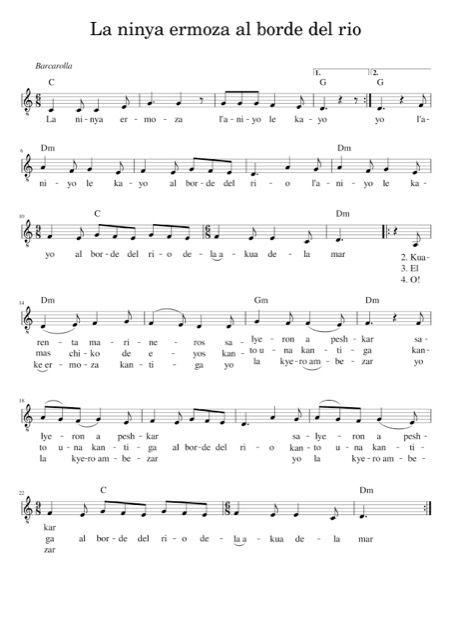
This is a rare song from the Sephardic tradition. Apart from the Flora Molho archive, it has not been identified in any other database, although its existence in another source cannot be ruled out, possibly with different lyrics or under a different title. The lyrics revolve around themes that are particularly beloved in Sephardic music: the young girl, who may be referred to as ninya, donzeya, galana, or even ija/fija (daughter). Equally timeless is the motif of the sea (la mar) or the river (el rio), as well as the presence of young sailors (los marineros), an image frequently encountered in Sephardic songs. The song does not narrate a specific story but instead relies on the flow and musicality of the verses, creating vivid and evocative imagery. Through its simplicity and repetitive structure, the song conveys an atmosphere of romance and nostalgia.
Version 1
La ninya ermoza al border del rio
Floro Molcho Archice. Performed by her parents Isaak and Rita Molcho.
Lyrics
La ninya ermoza l’ aniyo le kayo /la ˈniɲa eɾˈmoza laˈniʝo le kaˈjo/ The beautiful girl's ring fell.
La ninya ermoza l’ aniyo le kayo /la ˈniɲa eɾˈmoza laˈniʝo le kaˈjo/ The beautiful girl's ring fell.
L’ aniyo le kayo al borde del rio /laˈniʝo le kaˈjo al ˈboɾde del ˈɾio/ Her ring fell on the riverbank.
L’ aniyo le kayo al borde del rio de la akua de la mar /laˈniʝo le kaˈjo al ˈboɾde del ˈɾio de la ˈakwa de la ˈmaɾ/ Her ring fell on the riverbank by the waters of the sea.
Kuarenta marineros salyeron a peshkar /kwaˈɾenta maɾiˈneɾos salˈjeɾon a peʃˈkaɾ/ Forty sailors went out to fish.
Salyeron a peshkar al borde del rio /salˈjeɾon a peʃˈkaɾ al ˈboɾde del ˈɾio/ They went out to fish on the riverbank.
Salyeron a peshkar al borde del rio de la akua de la mar /salˈjeɾon a peʃˈkaɾ al ˈboɾde del ˈɾio de la ˈakwa de la ˈmaɾ/ They went out to fish on the riverbank by the waters of the sea.
El mas chiko de eyos kanto una kantiga /el mas ˈtʃiko de ˈeʝos ˈkanto ˈuna kanˈtiɣa/ The youngest of them sang a song.
El mas chiko de eyos kanto una kantiga /el mas ˈtʃiko de ˈeʝos ˈkanto ˈuna kanˈtiɣa/ The youngest of them sang a song.
Kanto una kantiga al borde del rio /ˈkanto ˈuna kanˈtiɣa al ˈboɾde del ˈɾio/ He sang a song on the riverbank.
Kanto una kantiga al borde del rio de la akua de la mar /ˈkanto ˈuna kanˈtiɣa al ˈboɾde del ˈɾio de la ˈakwa de la ˈmaɾ/ He sang a song on the riverbank by the waters of the sea.
O! ke ermoza kantiga yo la kyero ambezar /o ke eɾˈmoza kanˈtiɣa jo la ˈkjeɾo ambeˈzaɾ/ Oh, what a beautiful song, I want to learn it.
Yo la kyero ambezar al borde del rio /jo la ˈkjeɾo ambeˈzaɾ al ˈboɾde del ˈɾio/ I want to learn it on the riverbank.
Yo la kyero ambezar al borde del rio de la akua de la mar /jo la ˈkjeɾo ambeˈzaɾ al ˈboɾde del ˈɾio de la ˈakwa de la ˈmaɾ/ I want to learn it on the riverbank by the waters of the sea.
Version 2
La ninya ermoza al border del rio
Floro Molcho Archice. Performed by her father Isaak Molcho.
Lyrics
La ninya ermoza l’ aniyo le kayo /la ˈniɲa eɾˈmoza laˈniʝo le kaˈjo/ The beautiful girl's ring fell.
La ninya ermoza l’ aniyo le kayo /la ˈniɲa eɾˈmoza laˈniʝo le kaˈjo/ The beautiful girl's ring fell.
L’ aniyo le kayo al borde del rio /laˈniʝo le kaˈjo al ˈboɾde del ˈɾio/ Her ring fell on the riverbank.
L’ aniyo le kayo al borde del rio de la akua de la mar /laˈniʝo le kaˈjo al ˈboɾde del ˈɾio de la ˈakwa de la ˈmaɾ/ Her ring fell on the riverbank by the waters of the sea.
Kuarenta marineros salyeron a peshkar /kwaˈɾenta maɾiˈneɾos salˈjeɾon a peʃˈkaɾ/ Forty sailors went out to fish.
Salyeron a peshkar al borde del rio /salˈjeɾon a peʃˈkaɾ al ˈboɾde del ˈɾio/ They went out to fish on the riverbank.
Salyeron a peshkar al borde del rio de la akua de la mar /salˈjeɾon a peʃˈkaɾ al ˈboɾde del ˈɾio de la ˈakwa de la ˈmaɾ/ They went out to fish on the riverbank by the waters of the sea.
El mas chiko de eyos kanto una kantiga /el mas ˈtʃiko de ˈeʝos ˈkanto ˈuna kanˈtiɣa/ The youngest of them sang a song.
El mas chiko de eyos kanto una kantiga /el mas ˈtʃiko de ˈeʝos ˈkanto ˈuna kanˈtiɣa/ The youngest of them sang a song.
Kanto una kantiga al borde del rio /ˈkanto ˈuna kanˈtiɣa al ˈboɾde del ˈɾio/ He sang a song on the riverbank.
Kanto una kantiga al borde del rio de la akua de la mar /ˈkanto ˈuna kanˈtiɣa al ˈboɾde del ˈɾio de la ˈakwa de la ˈmaɾ/ He sang a song on the riverbank by the waters of the sea.
O! ke ermoza kantiga yo la kyero ambezar /o ke eɾˈmoza kanˈtiɣa jo la ˈkjeɾo ambeˈzaɾ/ Oh, what a beautiful song, I want to learn it.
Yo la kyero ambezar al borde del rio /jo la ˈkjeɾo ambeˈzaɾ al ˈboɾde del ˈɾio/ I want to learn it on the riverbank.
Yo la kyero ambezar al borde del rio de la akua de la mar /jo la ˈkjeɾo ambeˈzaɾ al ˈboɾde del ˈɾio de la ˈakwa de la ˈmaɾ/ I want to learn it on the riverbank by the waters of the sea.
Music Guide

 Bibliography
Research, analysis, translations and IPA transcriptions: Mariangela Chatzistamatiou Aural transcriptions and lead sheets: Nikos Panagiotides
Disclaimer: The content on this website is protected by copyright. Use of the content is allowed for personal or educational purposes only with clear citation of the source. Republishing, modifying, or using the content for commercial purposes is prohibited without prior explicit permission.

