





Description
The text of the song is drawn from the Book of Ruth, or Megillat Ruth, in the Hebrew Bible (Tanakh) [1], not in its original Hebrew form but in Judeo-Spanish. It is traditionally read during the festival of Shavuot and narrates the story of Ruth, a widow from the region of Moab, who chooses to remain with her widowed mother-in-law from Judea, declaring: “Where you go, I will go… your people shall be my people and your Gd my Gd” (1:16). Ruth’s devotion leads her to the field of her kinsman Boaz, whom she eventually marries. Together they have a child, who later becomes the grandfather of King David.
Shavuot (שָׁבוּעוֹת, meaning “weeks”) is a Jewish holiday celebrated seven weeks after Passover (Pesach) and commemorates the giving of the Law by G*d at Mount Sinai. According to tradition, dairy products are commonly consumed during Shavuot, and texts such as the Book of Ruth are read.
As the text originates from the Bible, it is not in itself rare. However, its recording in sung form is uncommon. In the present study, we present the version performed by Isaac Molho. Three additional recordings have been identified in the archive of the Maale Adumim Institute. In this archive, two recordings are attributed to the tradition of Thessaloniki, while the third originates from Monastir (former Yugoslavia).
In this study, we present both the recording by Isaac Molho and the more complete of the two recordings from the Maale Adumim Institute, which, according to the source, derives from the tradition of Thessaloniki.
A comparison of the musical text with various Judeo-Spanish translations of Megillat Ruth reveals differences between versions. This is to be expected, as both the Judeo-Spanish and Spanish versions are translations of the original Hebrew text. As a result, there does not appear to be a single standardized Judeo-Spanish version.
[1] The word Tanakh (תַּנַ"ךְ) is an acronym that represents the three main parts of the Hebrew Scriptures: the Torah (תּוֹרָה, meaning “Law” or “Teaching,” also known as the Pentateuch, which includes the first five books: Genesis, Exodus, Leviticus, Numbers, and Deuteronomy); the Nevi’im (נְבִיאִים), which are the Prophets and include historical books (such as J_oshua, Judges, Samuel, and Kings_) and prophetic books (such as Isaiah, Jeremiah, and Ezekiel); and the Ketuvim (כְּתוּבִים), the “Writings,” a diverse collection including poetry (Psalms, Proverbs), wisdom literature (Job), the Five Megillot (such as Ruth and Esther), and historical books (Chronicles, Ezra, Nehemiah).
Version 1
Ruth
Flora Molcho Archive
Performed by her father, Isaac Molcho
Lyrics
I fue en dias de djuzgar a los djuezes / i ˈfwe en ˈdi.as de dʒuzˈɣaɾ a los ˈdʒwezes / And it was in the days when the judges judged
i fue ambre en la tyerra / i ˈfwe ˈambɾe en la ˈtjera / and there was famine in the land
i el duvo varon de Bet-Lehem Yeuda / i el ˈduvo vaˈɾon de bet leˈem jeˈuda / and a man from Bethlehem of Judah went
por morar en tyerras de Moav / poɾ moˈɾaɾ en ˈtjeras de moˈav / to live in the lands of Moab
el i su mujer i dos sus ijos. / el i su muˈʒeɾ i dos sus ˈiʒos / he and his wife and his two sons
I el nombre del varon Elimeleh, / i el ˈnombɾe del vaˈɾon elimeˈlex / and the name of the man was Elimelech
i el nombre de su mujer Naomi, / i el ˈnombɾe de su muˈʒeɾ naoˈmi / and the name of his wife was Naomi
i nombre de dos sus ijos, / i ˈnombɾe de dos sus ˈiʒos / and the names of his two sons
Mahlon i Hilyon de Bet Lehem [de] Yeuda; / maˈlon i xiˈljon de bet leˈem jeˈuda / Mahlon and Chilion, from Bethlehem of Judah
i fueron por morar ayi. / i ˈfweɾon poɾ moˈɾaɾ aˈji / and they went to live there
I muryo Elimeleh marido de Naomi / i muˈɾjo elimeˈlex maˈɾiðo de naoˈmi / and Elimelech, the husband of Naomi, died
i fue romanisida la mujer de su marido / i ˈfwe romaniˈsida la muˈʒeɾ de su maˈɾiðo / and the woman was left without her husband
i muryeron [tambyen] ambos eyos / i muˈɾjeɾon tamˈbjen ˈambos ˈejos / and both of them also died
Mahlon i Hilyon [Efrati de Bet Lehem Yeuda] / maˈlon i xiˈljon efɾaˈti de bet leˈem jeˈuda / Mahlon and Chilion, Ephrathites of Bethlehem of Judah
i fue romanisida la mujer de su marido / i ˈfwe romaniˈsida la muˈʒeɾ de su maˈɾiðo / and the woman was left alone from her husband
i de dos sus ijos / i de dos sus ˈiʒos / and from her two sons
i disho Naomi a dos sus nueras “andad, mis ijas, andad” / i ˈdiʃo naoˈmi a dos sus ˈnweɾas anˈdad mis ˈiʒas anˈdad / and Naomi said to her two daughters-in-law: “go, my daughters, go”
Onde [tu] iras, ire, tu tyerra sera mi tierra, i tu Dyo [sera] mi Dyo. / ˈonde tu iˈɾas iˈɾe tu ˈtjera seˈɾa mi ˈtjera i tu ˈdjo seˈɾa mi ˈdjo / Where you go, I will go; your land will be my land, and your Gd my Gd.
Version 2
Ruth
Moshe Saul Archiive at the Maale Adumim Institute. Catalogue number: #721
https://folkmasa.org/avshir/shirp.php?mishtane=721
Performed by Yaakov Tsindikario
This recording is longer than the one by Isaac Molho and clearly closer to the text of Megillat Ruth. Tsindikario’s performance shows melodic variations and is rich in melismas and vocal ornamentation, in contrast to Molho’s version, which is more restrained and melodically simple. The way Tsindikario sings strongly recalls the aesthetic of Sephardic cantors in the synagogue. Based on his use of melismas and his vocal placement, it can be suggested that he may have been a cantor, although this remains to be confirmed through further research in the archive of the Jewish Community of Thessaloniki.
Lyrics
I fue en dia de djuzgar a los djuezes / i ˈfwe en ˈdi.a de dʒuzˈɣaɾ a los ˈdʒwezes / And it was in the day when the judges judged
i fue ambre en la tierra; / i ˈfwe ˈambɾe en la ˈtjera / and there was famine in the land
i anduvo varon de Bet Lehem Yeuda / i anˈduvo vaˈɾon de bet leˈem jeˈuda / and a man from Bethlehem of Judah went
por morar en kampos de Moav el i su mujer i dos sus ijos; / poɾ moˈɾaɾ en ˈkampos de moˈav el i su muˈ ʒeɾ i dos sus ˈiʒos / to live in the fields of Moab, he and his wife and his two sons
Ι nombre de el varon Elimeleh / i ˈnombɾe de el vaˈɾon elimeˈlex / and the name of the man was Elimelech
i nombre de su mujer Naomi / i ˈnombɾe de su muˈʒeɾ naoˈmi / and the name of his wife was Naomi
i nombre de dos sus ijos / i ˈnombɾe de dos sus ˈiʒos / and the names of his two sons
Mahlon i Hilion Efrati de BetLehem Yeuda; / maˈlon i xiˈljon efɾaˈti de bet leˈem jeˈuda / Mahlon and Chilion, Ephrathites of Bethlehem of Judah
Ι vinieron a kampos de Moav i fueron ayi; / i biˈnjeɾon a ˈkampos de moˈav i ˈfweɾon aˈji / and they came to the fields of Moab and stayed there
i murio Elimeleh marido de Naomi / i muˈɾjo elimeˈlex maˈɾiðo de naoˈmi / and Elimelech, Naomi’s husband, died
i fue romanesida eya i dos sus ijos; / i ˈfwe romaneˈsðia ˈeja i dos sus ˈiʒos / and she was left with her two sons
Ι tomaron para eyos mujeres moaviot, / i toˈmaɾon paɾa ˈejos muˈʒeɾes moaˈvjot / and they took for themselves Moabite women
nombre de la una Orpa i nombre de la segunda Rut; / ˈnombɾe de la ˈuna ˈoɾpa i ˈnombɾe de la seˈɣunda rut / the name of one was Orpah and the name of the second one, Ruth
Ι estuvieron ayi komo diez anyos; / i estuˈvjeɾon aˈji ˈkomo djes ˈaɲos / and they stayed there about ten years
i murieron tambien ambos eyos Mahlon i Hilion; / i muˈɾjeɾon tamˈbjen ˈambos ˈejos maˈlon i xiˈljon / and both of them, Mahlon and Chilion, also died
i fue romanesida la mujer de dos sus (n)inyos i de su marido. / i ˈfwe romaneˈsiða la muˈʒeɾ de dos sus ˈniɲos i de su maˈɾiðo / and the woman was left without her two sons and her husband
Ι alevantose eya i sus nueras i torno de kampos de Moav / i alevanˈtose ˈeja i sus ˈnweɾas i ˈtoɾno de ˈkampos de moˈav / and she arose with her daughters-in-law and returned from the fields of Moab
ke oyo en kampos de Moav / ke oˈjo en ˈkampos de moˈav / for she had heard in the fields of Moab
ke vijito Adonay a su puevlo por dar a eyos pan; / ke viʒiˈto adoˈnaj a su ˈpwevlo poɾ daɾ a ˈejos pan / that the Lord had visited His people to give them bread
Ι salio de el lugar ke fue ayi i dos sus nueras kon eyas / i saˈljo de el luˈɣaɾ ke ˈfwe aˈji i dos sus ˈnweɾas kon ˈeʝas / and she left the place where she had been, with her two daughters-in-law
i anduvieron en la karrera por tornar a tierra de Yeuda; / i anduˈvjeɾon en la kaˈreɾa poɾ toɾˈnaɾ a ˈtjera de jeˈuda / and they walked on the road to return to the land of Judah
Ι disho Naomi a dos sus nueras: / i ˈdiʃo naoˈmi a dos sus ˈnweɾas / and Naomi said to her two daughters-in-law
anda tornad kada una a kaza de su madre / ˈanda toɾˈnad ˈkada ˈuna a ˈkaza de su ˈmadɾe / “go, return each one to her mother’s house
aga Adonay kon vos mersed / ˈaɣa adoˈnaj kon vos meɾˈsed / may the Lord show you kindness
komo izitesh kon los muertos i konmigo; / ˈkomo iziˈteʃ kon los ˈmweɾtos i konˈmiɣo / as you have shown to the dead and to me”
De Adonay a vos i fayedesh olgansa / de adoˈnaj a vos i faʝeˈdeʃ olˈɣansa / “May the Lord grant you rest
kada una a kaza de su marido / ˈkada ˈuna a ˈkaza de su maˈɾiðo / each in the house of her husband”
i bezo a eyas; / i beˈzo a ˈeʝas / and she kissed them
Ι alsaron sus boz i yoraron i diheron a ella: / i alˈsaɾon sus bos i ʝoˈɾaɾon i diˈeɾon a ˈeʝa / and they lifted their voices and wept and said to her
ke kontigo tornaremos a tu puevlo; / ke konˈtiɣo toɾnaˈɾemos a tu ˈpwevlo / “We will return with you to your people”
Ι disho Naomi: tornad mis ijas / i ˈdiʃo naoˈmi toɾˈnad mis ˈiʒas / and Naomi said: “return, my daughters
porke andaresh konmigo; / ˈpoɾke andaˈɾeʃ konˈmiɣo / why will you go with me?
Si aun mis ijos en mis esentinas i seran a vos por maridos; / si aun mis ˈiʒos en mis esenˈtinas i seˈɾan a vos poɾ maˈɾiðos / Are there still sons in my womb to become your husbands?
Tornad mis ijas andad ke me envejesi de ser a varon / toɾˈnad mis ˈiʒas anˈdad ke me embeʝeˈsi de seɾ a vaˈɾon / Return, my daughters, go, for I am too old to have a husband
ke dishe ay a mi esperansa. / ke ˈdiʃe aj a mi espeˈɾansa / even if I say I have hope
tambien si fuese esta noche a varon / tamˈbjen si ˈfwese ˈesta ˈnotʃe a vaˈɾon / even if this night I had a husband
i tambien si pariere ijos; / i tamˈbjen si paˈɾjeɾe ˈiʒos / and even if I bore sons.
I disho Rut no roges en mi por desharte por tornar despues ti; / i ˈdiʃo rut no ˈroɣes en mi poɾ deʃaɾte poɾ toɾˈnaɾ desˈpwes ti / And Ruth said: “do not urge me to leave you, to turn away from you
Ke lo ke anduvieres andare i en lo ke durmieres dormire / ke lo ke anduˈvjeɾes andaˈɾe i en lo ke duɾˈmjeɾes doɾmiˈɾe / for where you go I will go, and where you sleep I will sleep,
tu puevlo mi puevlo i tu Dyo mi Dyo / tu ˈpwevlo mi ˈpwevlo i tu ˈdjo mi ˈdjo / your people shall be my people and your Gd my Gd
en lo ke murieres morire i ansi sere enterrada / en lo ke muˈɾjeɾes moɾiˈɾe i ˈansi seˈɾe enteˈrada / where you die I will die and there I will be buried
ansi aga Adonay a mi i ansi el aga ke la muerte esparta entre mi i entre ti. / ˈansi ˈaɣa adoˈnaj a mi i ˈansi el ˈaɣa ke la ˈmweɾte esˈpaɾta ˈentɾe mi i ˈentɾe ti / may the Lord do so to me, and more also, if anything but death separates me from you.”
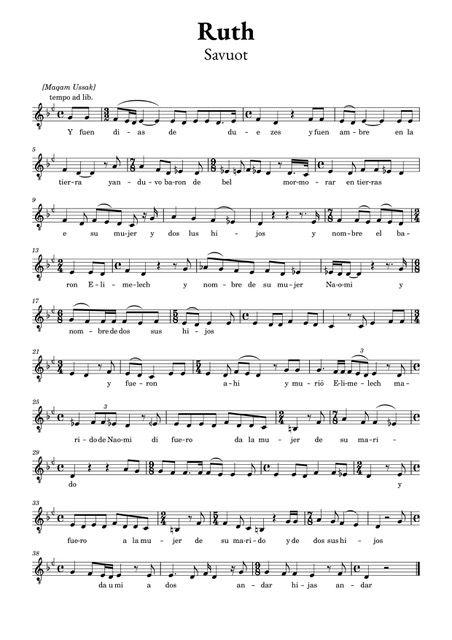
Music Guide

 Bibliography
Chabad.org. “What Is Shavuot?” @Chabad, 18 Jan. 2008,
www.chabad.org/library/article_cdo/aid/609663/jewish/What-Is-Shavuot.htm.
Nehama, Joseph. Dictionnaire Du Judéo-Espagnol. Madrid: Consejo superior de investigaciones cientificas, 1977.
“Ruth.” Sefaria.org, 2020, www.sefaria.org/Ruth?tab=contents. Accessed 12 Feb. 2025.
Research, analysis, translations and IPA transcriptions: Mariangela Chatzistamatiou Aural transcriptions and lead sheets: Nikos Panagiotides
Disclaimer: The content on this website is protected by copyright. Use of the content is allowed for personal or educational purposes only with clear citation of the source. Republishing, modifying, or using the content for commercial purposes is prohibited without prior explicit permission.

